
White Opal (White Opal) is a very charming and popular gemstone, known for its warm milky white color and unique "Play-of-color effect" (Play-of-color).
The following is a detailed introduction to the characteristics, origin and maintenance methods of white opal for you:
one、 Main characteristics and externalview
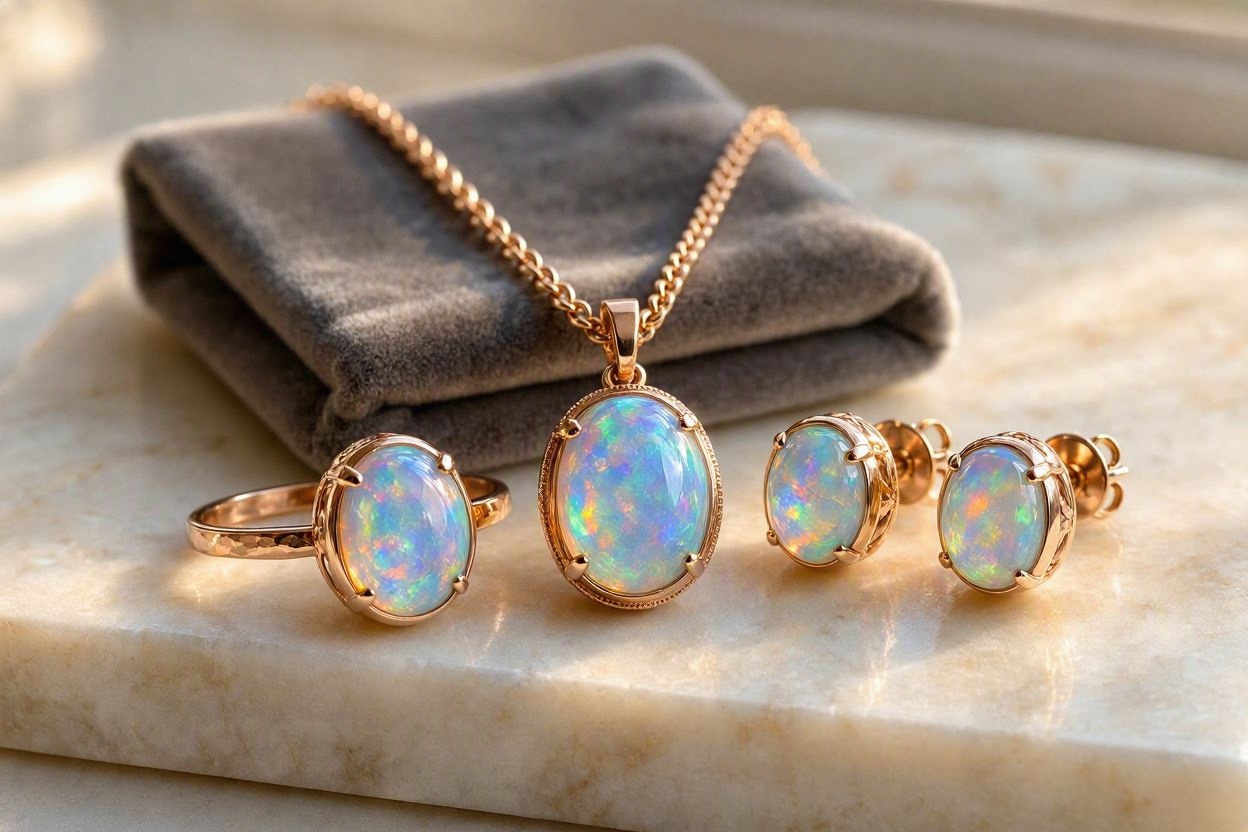
- Unique brilliance: Albumin stones usually have a translucent to opaque milky white or light-colored substrate, but when exposed to light, they will reflect a variety of colors such as red, blue, green, and yellow that flicker like a rainbow.
- Physical properties: The main component of opal is silicon dioxide hydrate, the hardness is about 5.5 to 6.5 Between them, the texture is relatively soft, and the interior contains about 3% to 21% moisture.
- Symbolism: In crystal and gemstone healing, white opal is regarded as a symbol of purity, hope and creativity, which can bring peace of mind and inspire inspiration.
two、 Main productsground
- Australia: The world's most famous opal producer, which produces most of the world's high-quality opals (such as the famous Lightning Ridge area).
- Mexico: It is famous for producing fire opals and opals with a strong sense of transparency.
- Other regions: Including Brazil, Ethiopia and the United States, opal is also produced.
three、 Precautions for wearing and maintenanceitem
Because the white opal contains moisture and its hardness is not high, daily maintenance requires special care.:
- Avoid collision: The hardness is low and it is easy to be scratched by other gems with higher hardness (such as diamonds and rubies). It is recommended to store separately.
- Chemical contraindications: You should avoid contact with perfumes, cosmetics, cleaning agents or alkaline substances. It is recommended to remove them when taking a bath or doing housework.
To distinguish the authenticity of white opal (and whether it is natural, synthetic or flattened stone), it can be observed from several core characteristics such as appearance, structure, and luster. The following are a few practical identification methods for you:
1. Observe the pattern and naturalness of the color change (the most critical)
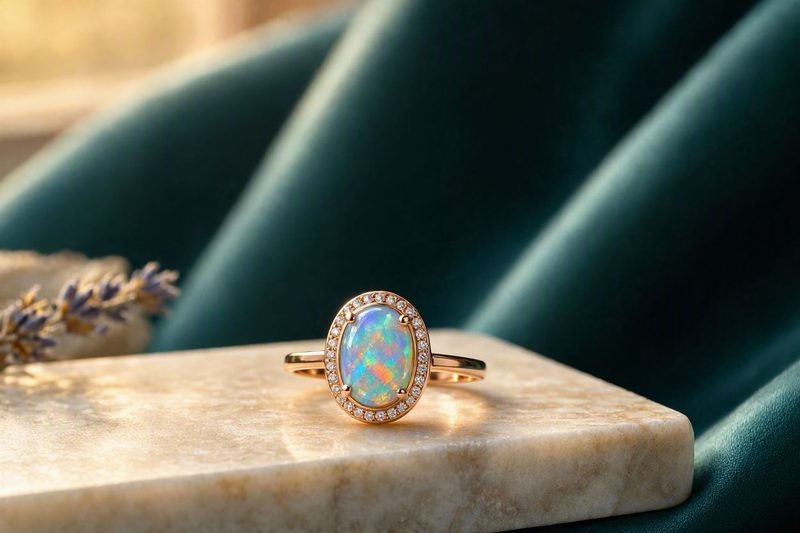
- Natural opal: The naturally formed Play-of-Color is very smooth, random and varied. When you turn the gemstone, the colored patches will flow naturally like clouds or flames, and the patterns seen from every angle are unique.
- Synthetic / imitation stone:
- "Snake skin pattern" or "plaid pattern": The structure of synthetic opals (such as the famous Gilson synthetic opal Gilson Opal) is too regular. When zooming in, they often appear like fish scales, snake skins, or regular lattice-like arrangements, which are too rigid.
- Too perfect and flawless: Natural gemstones will have some growth lines, impurities, or traces of the parent rock; if they look flawless and the color is unnaturally bright, you must be vigilant.
2. Check the side and back of the gemstone
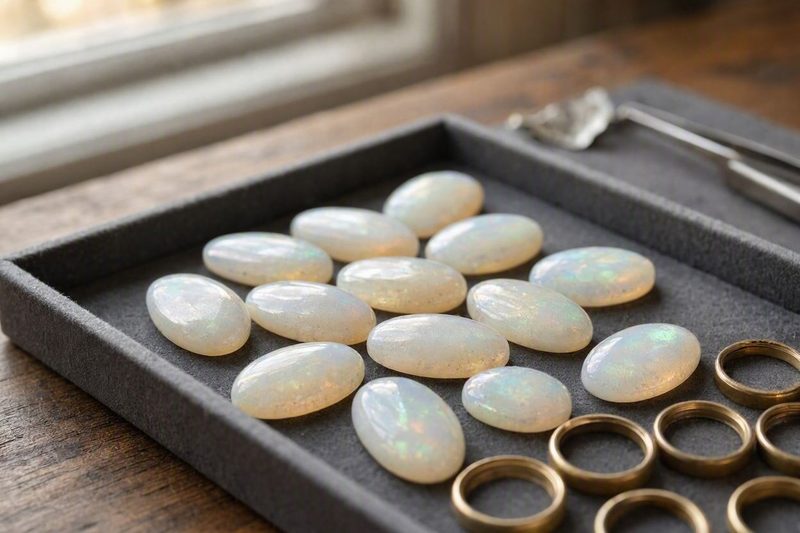
Many "opals" on the market are actually processed flattened stones (not fakes, but they are artificially bonded), which is very common in white opals.:
- Double stone (Doublet): A thin layer of natural opal is on the top, and a layer of dark mother rock (such as iron ore) is glued to the bottom to increase the overall brightness of the fire color.
- Three-layer stone (Triplet): The bottom layer is a black base (such as glass or plastic), with a very thin layer of natural opal in the middle, and the top layer is covered with a piece of transparent quartz or glass to make a convex surface protection.
- Discernment skills: Looking at the waist circumference of the gemstone from the side, if you can see a clear horizontal bonding line, or the back has a jet-black plastic/glass texture that does not match the front at all, it means that it is a double-layer or three-layer flattened stone.
3. Touch and weight
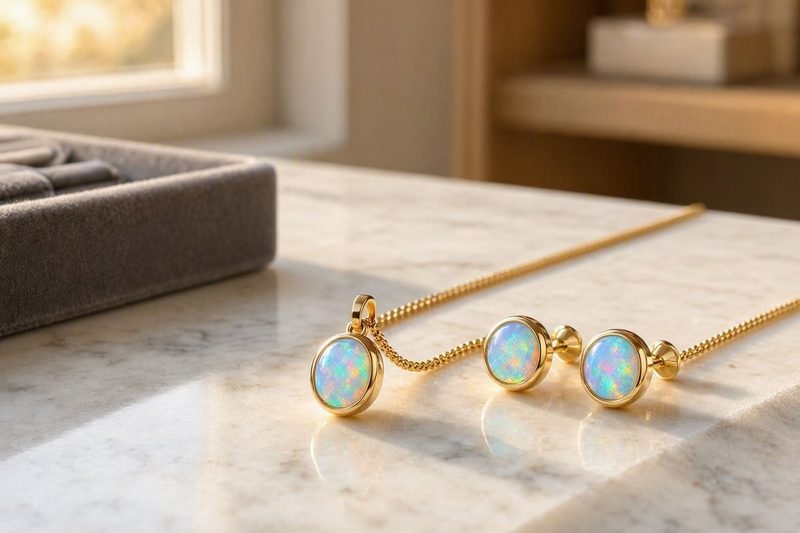
- Sense of temperature: Natural opals will feel colder in the early stage when they are held in your hand, while counterfeit products made of plastic or resin are usually warmer, and may feel a little waxy or plastic to the touch.
- weight:The weight of plastic imitations is usually much lighter than that of real natural gems.
4. Ultraviolet Light test (UV Light)
- Under ultraviolet light, most natural Australian albumin stones will show a soft fluorescent response.
If it is a flattened stone, ultraviolet light often causes the internal adhesive line to show a fluorescent or luminous color different from the opal itself.
I hope you can buy your favorite and natural opal.