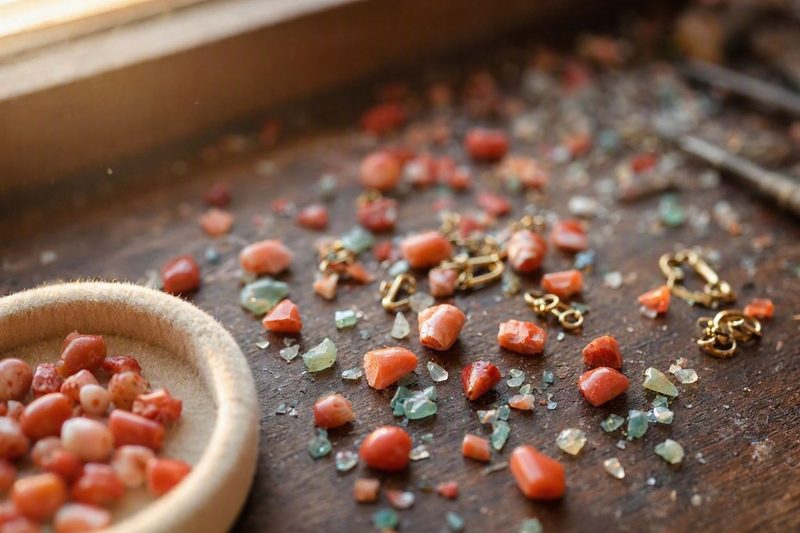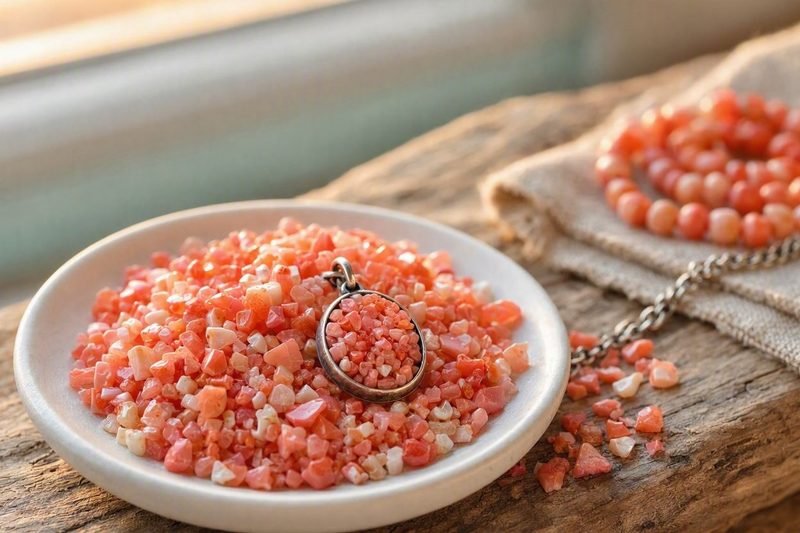
Natural corals are marine biological structures formed by the accumulation of calcium carbonate exoskeletons secreted by polyps (Polyp); artificial corals refer to the purpose of humans to repair marine ecology.、
"Coral reproductions" or "cultivation matrices" that are artificially manufactured or cultivated using various materials for alternative purposes for scientific research or decoration.
The following compares the differences between the two in detail from the four core dimensions for you:
1. Composition and structure
- Natural coral: It belongs to the living marine life (Phylogeny of thorn cells) and consists of thousands of tiny polyps. The main component of its bones is calcium carbonate (calcite or aragonite), which has complex biological pores and microstructure.
- Artificial coral: Varies by purpose:
- For ecological restoration: It is usually made of environmentally friendly cement, ceramics, calcosilicate or 3D-printed biocompatible materials as a "plug/tile" for transplanting coral larvae, or a reef plate that mimics the structure of a reef.
- Ornamental or alternative use: It is mostly made of resin, silicone, plastic or glass, and mainly pursues similar appearance.
2. Ecological function and value
- Natural coral: It constitutes a "coral reef ecosystem" with the highest biodiversity and great ecological value in the ocean. It can provide habitat, food and shelter for about one-quarter of the world's marine life, and at the same time has excellent coastal protection and carbon sequestration.
- Artificial coral:
- Used forEcological restorationThe artificial reef or pedestal can assist oceanographers in "coral branch planting" and reef plate reconstruction, attract fish to gather and accelerate the recovery of damaged ecosystems.
- Used forOrnamental decorationArtificial corals do not have ecological functions at all.
3. Growth and vitality
- Natural coral: It has life and a slow growth rate (it varies from species to species, ranging from only a few centimeters per year). It is extremely sensitive to the environment and is vulnerable to the threats of "coral bleaching", ocean acidification and water pollution caused by global warming.
- Artificial coral: It has no life itself (if it refers to the material), will not grow, will not bleach or die, but scientists often fix "living natural coral larvae" on artificial bases for cultivation.
4. Main application scenarios
- Natural coral: Distributed in the clear and shallow waters of the tropics and subtropics around the world, it is the core composition of marine ecology.
- Artificial coral:
- Marine conservation: It is used in the Coral Reef Restoration Project (Coral Reef Restoration).
- Aquarium landscaping: Provide players with beautiful and ecological decoration options.
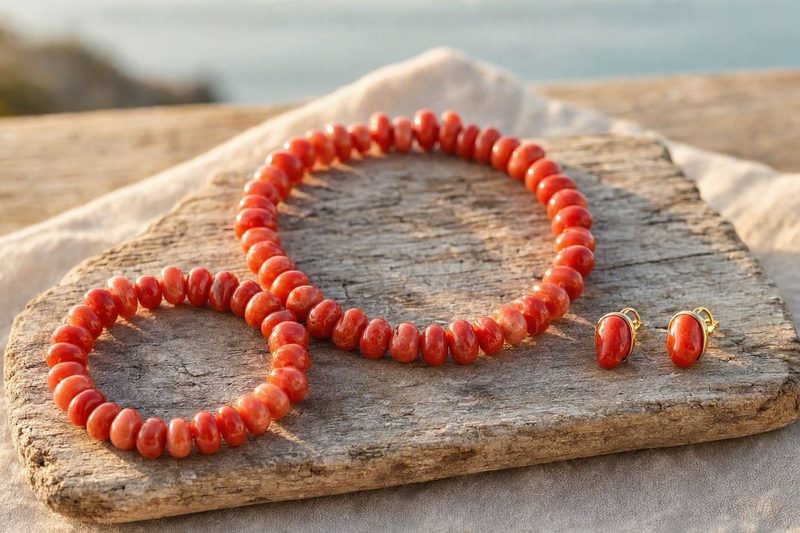
- Jewelry replacement: Sometimes synthetic materials are used on the market to replace conservation gem corals such as red coral to protect wild resources.
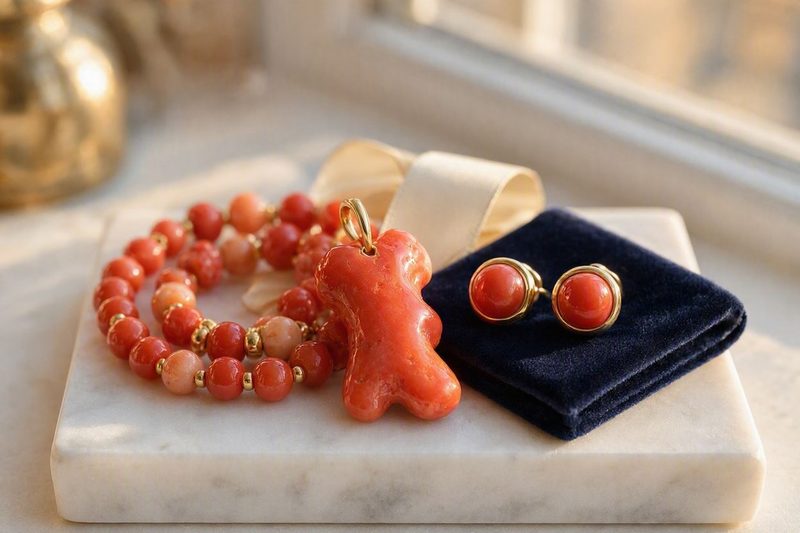
When artificial corals are used inJewelry jewelryIn the field, it is mainly to replace those facing resource depletion and endangered crises.Natural gem coral(For example, red coral, blue coral, etc.). The following is a detailed introduction to the difference between natural corals and artificial corals for jewelry:
1. Material and composition
- Natural gem coral (such as red coral):
- It belongs to a deep-sea organic gemstone and is composed of deep-sea polyps (eight types of corals, such as the genus Red coral). Corallium) Secreted calcium carbonate (mainly calcite or aragonite) bones.
- It grows in extremely deep waters with low water temperatures, making it extremely difficult to mine.
- Artificial coral for jewelry:
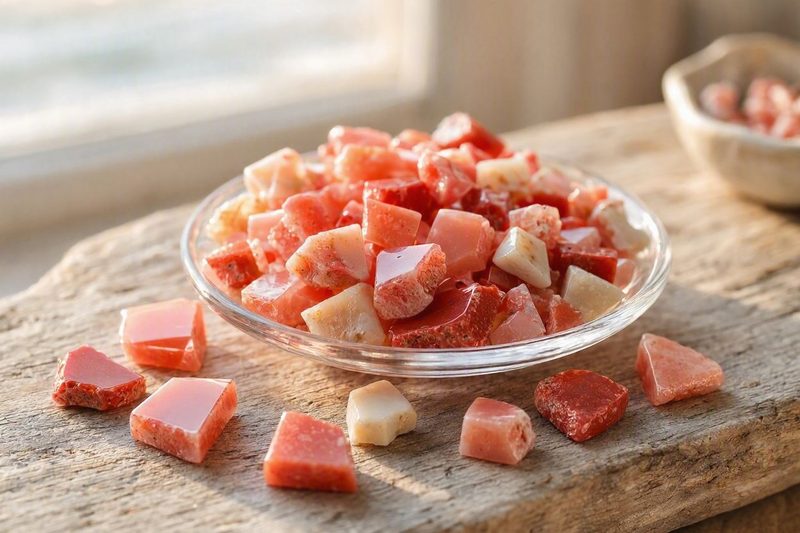
- Synthetic materials (such as Gilson synthetic coral Gilson Coral): The chemical composition is the same as that of natural corals (all calcium carbonate), but it is artificially synthesized by laboratory high-pressure and high-temperature technology.
- Replace imitations: Common ones are acrylic, resin, dyed marble (sea bamboo dyeing), glass or artificial ceramics, etc. The chemical composition is completely different from that of natural corals.
2. Appearance and texture details
- Natural gem coral:
- It has a natural growth texture (usually showing longitudinal stripes or tiny concentric circles/wavy patterns parallel to the branches, commonly known as "gemstone patterns" or "ribbing").
- The colors are mostly natural red, pink, orange, white or black. The color is warm and there will be a natural transition in depth.
- Artificial coral for jewelry:
- Synthetic coral: Under a microscope or using instruments, unique mesh-like or dot-like structures can be observed, without the smooth growth patterns of natural corals.
- Imitations (resin, plastic, etc.): The surface is often too perfect, has no natural texture, or feels light to the touch, feels plastic, and even bubbles can be seen under a magnifying glass.
3. Environmental protection and conservation value
- Natural gem coral: The growth rate is extremely slow (it takes decades or even hundreds of years to grow into a small plant). Overfishing has led to serious depletion of wild resources. Many species have been listed as protected by the Convention on International Trade in Endangered Species of Wild Flora and Fauna (CITES) and face strict trade controls.
- Artificial coral for jewelry:
- It is a sustainable and environmentally friendly choice, which can not only meet people's aesthetic needs for coral jewelry, but alsoDoes not harm marine ecology at all。
- It can effectively curb the theft of wild red coral.
4. Price and value preservation
- Natural gem coral: Especially the top-of-the-line "Oxblood" natural red coral, which is rare in production and difficult to obtain legal raw materials, has a very high collection value, room for preservation and appreciation, and is expensive.
- Artificial coral for jewelry: The price is relatively close to the people and popular. The main selling point lies in the decorative and fashionable design, and it does not have the investment and value preservation functions of natural and rare gemstones.